Altr Ego, the brand
Three decisions behind the brand, August to October 2026. AI agents and tools made the pieces. Every final call was mine.Live on the App Store ↗
01
The icon
August 17 to October 1, 2026
- Problem
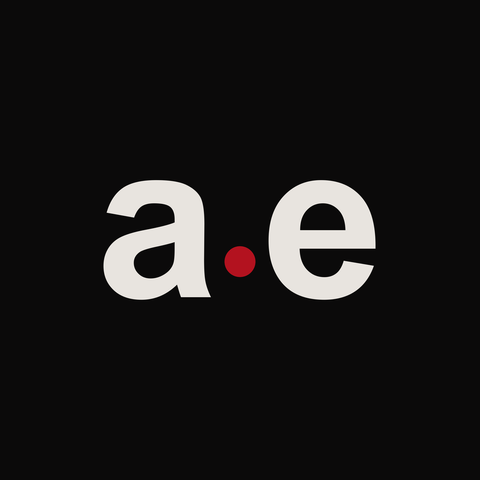
- My first idea for the icon, “ae”, was too plain.
- The call
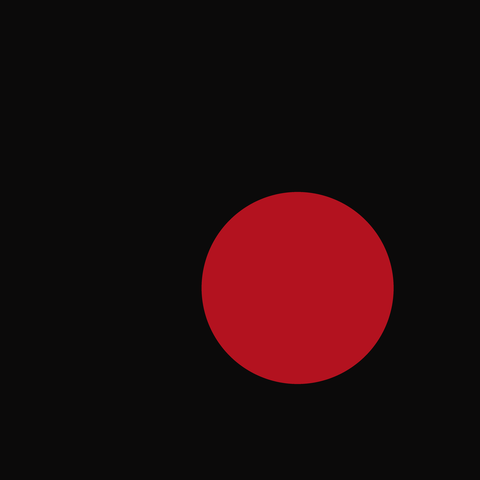
- An agent drew four flat directions and tested each at 120, 80 and 40 px; two held at every size. The agent and I both picked (c). That evening I switched to (a), the red dot, because it looked clean and fresh.
- What happened
- On launch day I saw it on my phone: the thin edge iOS draws on every icon, and a shine on the dot. I left the edge and made the dot flat, in build 1.0.1.
Aug 17

ae, the first mark, as the Instagram avatar
Aug 30
 a
 b
 c
 d
Four directions, shown here at a real 40 px
Aug 30, 6:29 pm
(c), the double take, goes in
Aug 30, 8:13 pm
(a), the red dot, replaces it
Oct 1
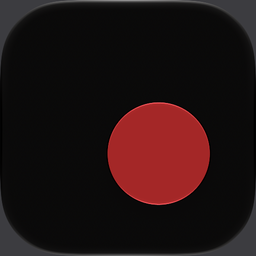
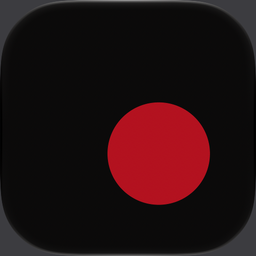
The dot made flat, build 1.0.1
02
The reveal card
August 16 to October 7, 2026
- Problem
- I wanted a fun way to see what your friends think of you.
- The call
- Nobody reads their card until they answer the same questions about themselves, so the card can compare what you said with what your friends said. An AI model writes every card. It never sees your name, and I had it pick traits from a fixed list instead of inventing them.
- What happened
- On September 18 I used the live app: after I answered the 12 questions about myself, it still kept my card locked. I reported the bug and an agent fixed it.
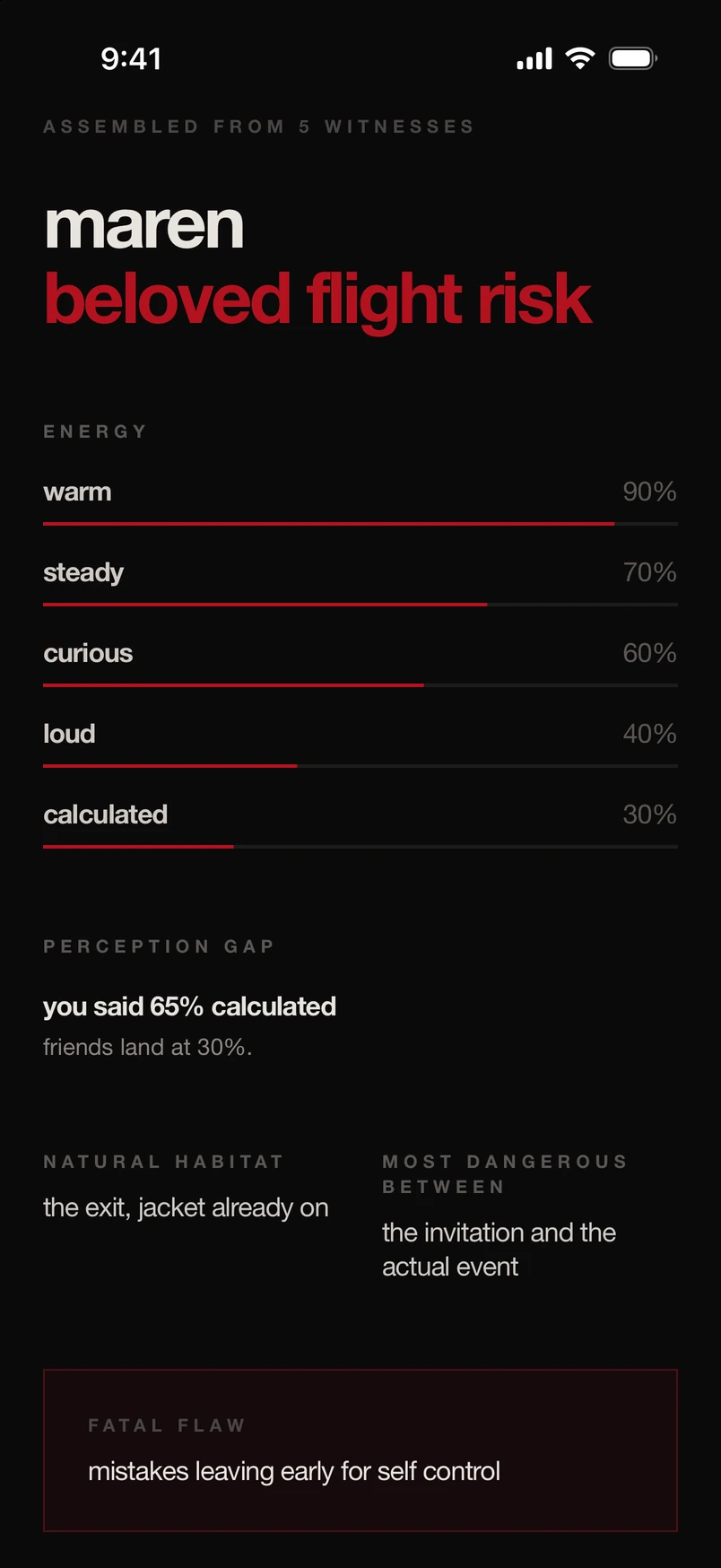
Demo content: a sample profile, not a real person.
- Labels. Small tracked capitals, the one place capitals appear.
- The verdict. The one line set in red.
- The bars. Each trait a 2 px red bar.
- The gap. What you said beside what your friends said.
- The fatal flaw. On its own dark red ground.
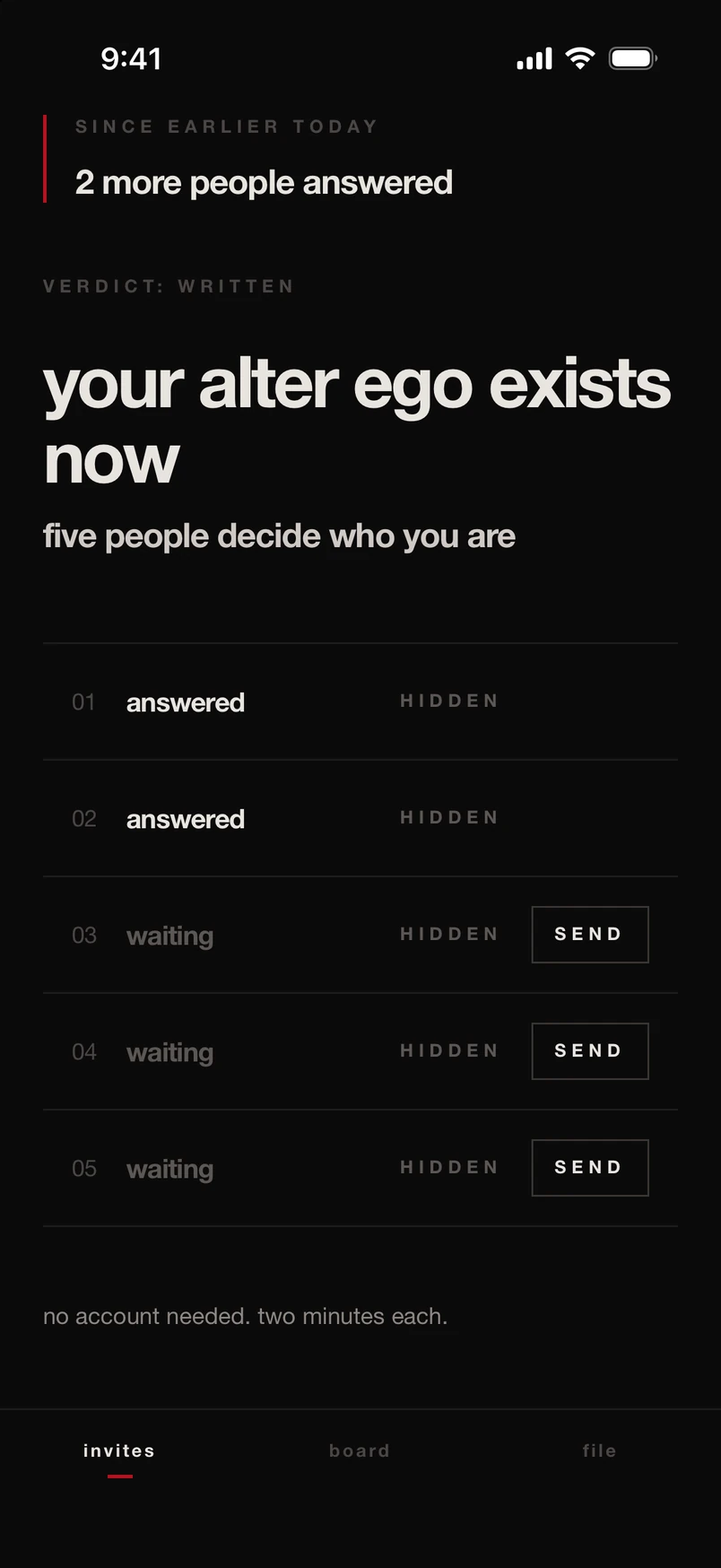
The invite screen shows how many friends have answered. Every answer is marked hidden.
03
The campaign
August 21 to October 7, 2026
- Problem
- The one goal was waitlist sign-ups, on a $0 budget.
- The call
- Show the app, don’t explain it. I scrapped a fast montage built three ways, and later cut 15 of 18 drafted posts that still felt as dull as the earlier content. Claude wrote the prompts and the code; I ran every generation, chose what to keep and posted each piece myself.
- What happened
- On my TikTok, 21 posts from August 31 to September 25, some branded and some personal, drew 28,779 views at 6.4% engagement, for $0. What fell short: no followers gained, zero net sign-ups from everything posted in week 1, and 54.8% of the views on the top two posts.
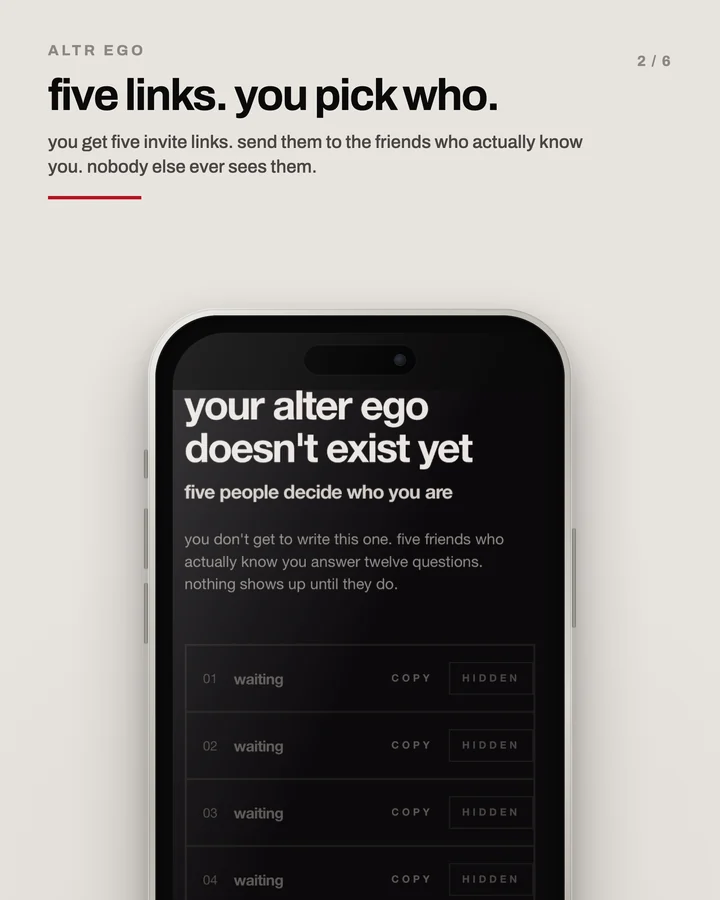
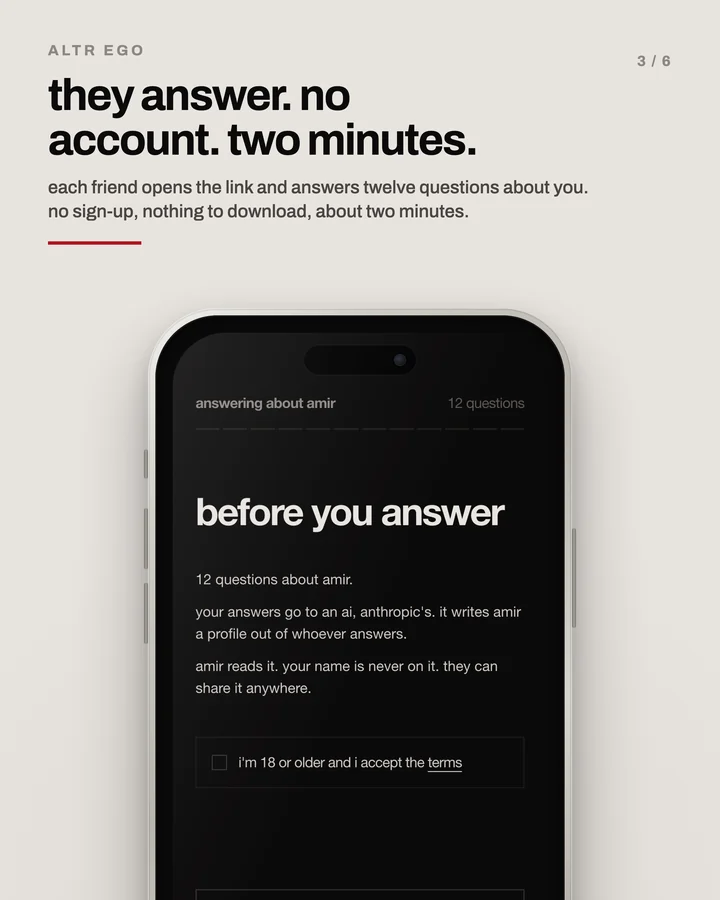
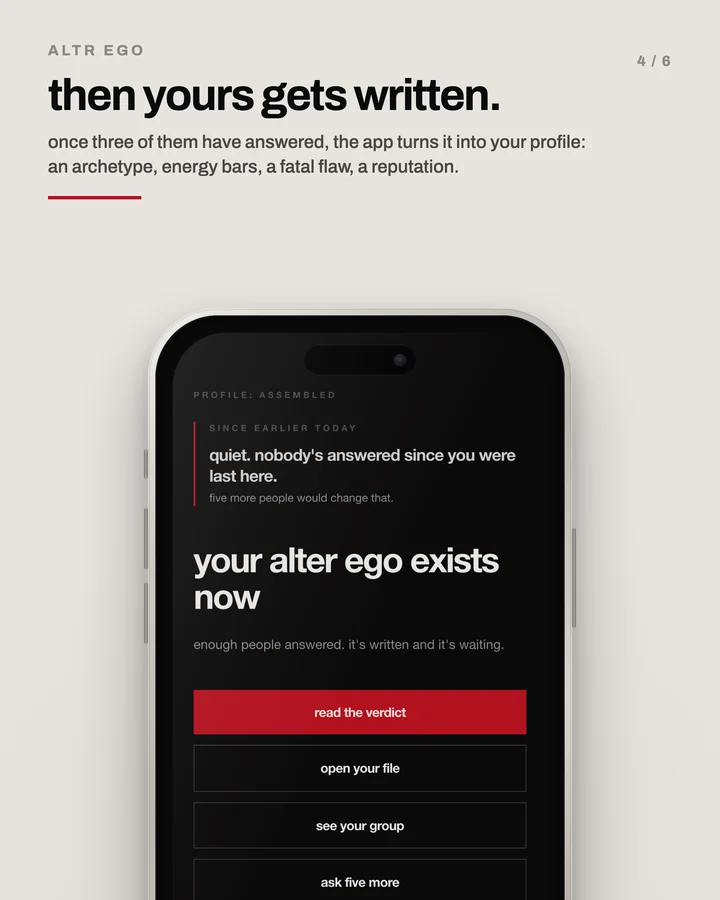
What the trailer shows: your friends already answered. A group text goes out, hey complete my altr ego through this link, with the app’s card, five people decide who you are, and five replies come back, blacked out. A file on you fills in: alignment, chaotic good; social, delusional and will somehow figure it out, each with a percentage; fatal flaw, thinks every situation has lore; reputation, will convince everyone to go out and then complain about being tired; answered by five. Then: five of them said it. you’ll never know which. It ends on altr ego and get the app.
The system
As built, from the app’s code
Name
I began with Alter Ego, which was too generic and had no identity of its own. I dropped the e to stay clear of a name already taken.
Icon
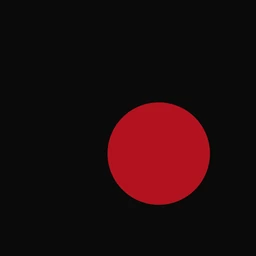 120 px
- 80 px
- 40 px
One off-center red circle on near black, flat.
Color
- Near black#0B0A0AThe ground
- Bone#E8E4DFHeadlines and text
- Grey#8D8783Body text
- Dark grey#5C5754Labels
- Red#B3121FSmall doses
Type
your alter ego exists now
Display, 40 px, bold
nobody is ever named. no account.
Body, 13 px, regular
perception gap
Label, 10 px, capitals
Helvetica Neue, because it lets the rest of the brand stand out.
Voice
Lowercase, like a text from a friend. Capitals only in the small labels.
Say only what’s true.
Show the app, don’t explain it.